
|

|

|
Of Zatar, Olive oil, and Mint Tea
By Mike Odetalla
I could not wait to get home yesterday. My wife had called me and told me that a package from Palestine had arrived. I relish
these “care” packages from my mother and brother in Palestine. They usually send me, amongst other things, pure, cold
pressed, virgin olive oil. It cannot be brought anywhere in the world. This special oil you see is by no means ordinary. It comes
exclusively from my family’s ancient olive orchards. Some of these trees are hundreds of years old and were planted by my
forefathers who had for many years before me, enjoyed their bounty.
The reason I was excited was because I had also asked them to send me a couple packages of dried whole leaf Zatar (wild
thyme that grows in the hills of Palestine) and last, but not least, some of mothers famous cracked olives. The cracked olives
are also from our own trees. They were hand picked, cracked, and pickled by my mother’s own loving hands. My kids often
tell me that no matter what their grandmother makes, it always taste better than anything they ever tasted. My eldest son
attributes this to the “special grandma hands” that prepare these foods. Zatar, is a Palestinian stable. It is served on the side
with meals and sometimes as a snack. The Zatar is usually picked in spring time from the hills of Palestine. After drying, the
Zatar is then mixed with sumac and other spices, ground to a semi-powdery consistency, and the sesame seeds are then added.
The ground mixture is then served with olive oil on the side. The proper way to eat it is to first dip a piece of bread in olive oil,
and then dip it into the Zatar. The oil makes the Zatar stick to the bread adding to its delicious flavor. I cannot count how many
breakfasts and midnight snacks in which I had eaten Zatar. My children today in America eat the Zatar that grows in the hills of
the village of my birth, just as their forefathers had done hundreds of years earlier in Palestine. In fact the Zatar and olive oil they
eat today comes from Palestine exclusively. The hills and orchards of their ancestry still provide them with their favorite food.
The thread continues.
Whole leaf Zatar is very hard to come by here in the US. I have tried many times the small packages of “organic wild thyme”
that is sold at obscene prices here in the US, but to no avail. The taste does not even come close. The “zest” is missing. That is
why I was so excited. My mom, who lives in Palestine, makes some of the most delicious salads out of Zatar. The taste of her
salad is beyond description. In fact, when I returned to Palestine last June with my wife and kids, the first thing that I asked my
mother to make for me was breakfast that consisted of her famous Zatar salad, cracked olives, and her home made cheese.
This, along with a pot of the mint tea, was the dream meal for me. Zatar salad is made by using fresh whole leaf Zatar, olive oil,
salt, and fresh squeezed lemon juice from the lemon trees that grow just outside our window.
When I went back home to Palestine in the spring of 2000, I could not contain my excitement. This was my first trip home to
Palestine during the spring time. I had not experienced spring in Palestine since I left in 1969. The hills that surround my village
were ablaze with greenery and color. I was nostalgic for the days of my youth in which I had spent endless days playing and
exploring the hills of my village. I convinced my younger brother, my cousin (who was visiting from California), and a few
friends of ours to meet us and head for the hills to pick wild Zatar (the wild variety has a bit more zest and flavor than other
varieties). We decided to make an afternoon of it. We packed home made goat cheese, fresh sliced tomatoes, some nuts and
seeds, a few sprigs of mint, a tea pot, and a portable gas cook top so that we would be able to make mint tea on the hill top.
Along the way to the hills, we stopped by my aunts home which is located midway up the face of the hill. We were surprised to
find her baking fresh whole wheat bread in the taboon (a clay and earthen wood fired oven whereby bread is baked over small,
round, and smooth stones just as it had been for hundreds of years in the villages of Palestine). She gave us a half dozen hot
loaves of her famous bread (the likes of which I have yet to taste anywhere in the world). Armed with hot bread, we continued
to the top of the hill.
Once we reached our destination, we spread out in our hunt for the elusive Zatar plants that grow only during the spring in the
hills of Palestine. When we had gathered enough Zatar, we spread out a blanket and our “picnic” started. The fresh Zatar, hot
fresh bread, and mint tea. This was by far one of the highlights of my trip to Palestine. It conjured up memories of many years
ago of olive harvests and the simple pleasures of life on one’s land that the Fellah of Palestine had enjoyed. It was not hard to
imagine that this scene must have been played out countless times before by the people of Palestine. The attachment between
the Palestinian people and their land is in my mind unparalleled.
As the sun began to set, bathing the entire village and the surrounding hills in its golden glow, I sat silent, sipping my tea. My mid
drifted to the Palestinian refugees who were forced off their lands and can only dream of this scene as they waste away in the
miserable, squalid, and cramped refugee camps. These scenes are now no more than distant memories and the topics of
countless stories told and retold to children who listen in wide eyed awe. I also could not help but think of the Jewish
settlements that seemed to dwarf and indeed dominate the village of my birth. It seemed that every time that I see them, they
look as if they have gotten bigger and moved closer to the village. Indeed these settlements do in fact keep getting bigger and
swallow more Palestinian land. To my mind’s eye, they look like they are about to “pounce” on the villages below. Their
domination of the Palestinian villages is a symbol of the occupation and what is seeks to accomplish in Palestine. The aim is to
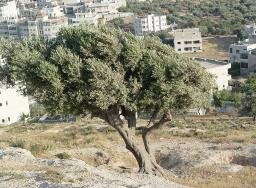
dominate and subjugate the Palestinian people and their lands. But as I look at the lone ancient olive tree that stands on the very
top of the hill, as it has for hundreds more years than Israel has been a state, I am heartened. This tenacious windswept tree,
which grows in the direction of the winds that have been buffeting it for hundreds of years, is still standing proud much like the
people that planted it and many more trees like it in Palestine. It has survived and actually thrived in very harsh and inhospitable
conditions. So too will the people of Palestine…
Mike Odetalla
2003
By Mike Odetalla
I could not wait to get home yesterday. My wife had called me and told me that a package from Palestine had arrived. I relish
these “care” packages from my mother and brother in Palestine. They usually send me, amongst other things, pure, cold
pressed, virgin olive oil. It cannot be brought anywhere in the world. This special oil you see is by no means ordinary. It comes
exclusively from my family’s ancient olive orchards. Some of these trees are hundreds of years old and were planted by my
forefathers who had for many years before me, enjoyed their bounty.
The reason I was excited was because I had also asked them to send me a couple packages of dried whole leaf Zatar (wild
thyme that grows in the hills of Palestine) and last, but not least, some of mothers famous cracked olives. The cracked olives
are also from our own trees. They were hand picked, cracked, and pickled by my mother’s own loving hands. My kids often
tell me that no matter what their grandmother makes, it always taste better than anything they ever tasted. My eldest son
attributes this to the “special grandma hands” that prepare these foods. Zatar, is a Palestinian stable. It is served on the side
with meals and sometimes as a snack. The Zatar is usually picked in spring time from the hills of Palestine. After drying, the
Zatar is then mixed with sumac and other spices, ground to a semi-powdery consistency, and the sesame seeds are then added.
The ground mixture is then served with olive oil on the side. The proper way to eat it is to first dip a piece of bread in olive oil,
and then dip it into the Zatar. The oil makes the Zatar stick to the bread adding to its delicious flavor. I cannot count how many
breakfasts and midnight snacks in which I had eaten Zatar. My children today in America eat the Zatar that grows in the hills of
the village of my birth, just as their forefathers had done hundreds of years earlier in Palestine. In fact the Zatar and olive oil they
eat today comes from Palestine exclusively. The hills and orchards of their ancestry still provide them with their favorite food.
The thread continues.
Whole leaf Zatar is very hard to come by here in the US. I have tried many times the small packages of “organic wild thyme”
that is sold at obscene prices here in the US, but to no avail. The taste does not even come close. The “zest” is missing. That is
why I was so excited. My mom, who lives in Palestine, makes some of the most delicious salads out of Zatar. The taste of her
salad is beyond description. In fact, when I returned to Palestine last June with my wife and kids, the first thing that I asked my
mother to make for me was breakfast that consisted of her famous Zatar salad, cracked olives, and her home made cheese.
This, along with a pot of the mint tea, was the dream meal for me. Zatar salad is made by using fresh whole leaf Zatar, olive oil,
salt, and fresh squeezed lemon juice from the lemon trees that grow just outside our window.
When I went back home to Palestine in the spring of 2000, I could not contain my excitement. This was my first trip home to
Palestine during the spring time. I had not experienced spring in Palestine since I left in 1969. The hills that surround my village
were ablaze with greenery and color. I was nostalgic for the days of my youth in which I had spent endless days playing and
exploring the hills of my village. I convinced my younger brother, my cousin (who was visiting from California), and a few
friends of ours to meet us and head for the hills to pick wild Zatar (the wild variety has a bit more zest and flavor than other
varieties). We decided to make an afternoon of it. We packed home made goat cheese, fresh sliced tomatoes, some nuts and
seeds, a few sprigs of mint, a tea pot, and a portable gas cook top so that we would be able to make mint tea on the hill top.
Along the way to the hills, we stopped by my aunts home which is located midway up the face of the hill. We were surprised to
find her baking fresh whole wheat bread in the taboon (a clay and earthen wood fired oven whereby bread is baked over small,
round, and smooth stones just as it had been for hundreds of years in the villages of Palestine). She gave us a half dozen hot
loaves of her famous bread (the likes of which I have yet to taste anywhere in the world). Armed with hot bread, we continued
to the top of the hill.
Once we reached our destination, we spread out in our hunt for the elusive Zatar plants that grow only during the spring in the
hills of Palestine. When we had gathered enough Zatar, we spread out a blanket and our “picnic” started. The fresh Zatar, hot
fresh bread, and mint tea. This was by far one of the highlights of my trip to Palestine. It conjured up memories of many years
ago of olive harvests and the simple pleasures of life on one’s land that the Fellah of Palestine had enjoyed. It was not hard to
imagine that this scene must have been played out countless times before by the people of Palestine. The attachment between
the Palestinian people and their land is in my mind unparalleled.
As the sun began to set, bathing the entire village and the surrounding hills in its golden glow, I sat silent, sipping my tea. My mid
drifted to the Palestinian refugees who were forced off their lands and can only dream of this scene as they waste away in the
miserable, squalid, and cramped refugee camps. These scenes are now no more than distant memories and the topics of
countless stories told and retold to children who listen in wide eyed awe. I also could not help but think of the Jewish
settlements that seemed to dwarf and indeed dominate the village of my birth. It seemed that every time that I see them, they
look as if they have gotten bigger and moved closer to the village. Indeed these settlements do in fact keep getting bigger and
swallow more Palestinian land. To my mind’s eye, they look like they are about to “pounce” on the villages below. Their
domination of the Palestinian villages is a symbol of the occupation and what is seeks to accomplish in Palestine. The aim is to
dominate and subjugate the Palestinian people and their lands. But as I look at the lone ancient olive tree that stands on the very
top of the hill, as it has for hundreds more years than Israel has been a state, I am heartened. This tenacious windswept tree,
which grows in the direction of the winds that have been buffeting it for hundreds of years, is still standing proud much like the
people that planted it and many more trees like it in Palestine. It has survived and actually thrived in very harsh and inhospitable
conditions. So too will the people of Palestine…
Mike Odetalla
2003